


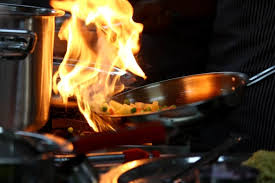
The kitchen is no longer just a place of heat and steam; it is a laboratory. For those entering Food Production, the journey begins with mastering the "Mother Sauces," but it quickly evolves into the fascinating world of Culinary Science.
Modern food production is witnessing a revolution through Molecular Gastronomy. Chefs today use tools like sous-vide immersion circulators to achieve perfect textures and liquid nitrogen to create instant sorbets. Understanding the chemical reaction—such as the Maillard reaction that gives a steak its crust—is what separates a cook from a Chef. At IIMS Malappuram, we train our students to respect the ingredients. This means practicing "Farm-to-Table" ethics, where the focus is on sustainability, reducing food waste, and honoring seasonal produce.
Beyond the techniques, a professional kitchen is a lesson in Leadership and Discipline. The "Brigade de Cuisine" system teaches students how to work as a synchronized unit under intense time constraints. Whether it is the precision of a Julienne cut or the complex layering of a French pastry, food production is a pursuit of perfection. For an aspirant, this field offers the chance to build a global career, where your "signature dish" becomes your passport to the world's finest hotels.